
There’s a rotating shelf at our local grocery store, and it brings in unique (at least to us) beers from all over the globe. Well, it must have heard me saying how much I wanted a dunkel, because it supplied one, with a twist.
That twist being the addition of the hefe weizen, which translates to ‘yeast wheat’ and brings those funky flavors of banana and clove. Dunkel means ‘dark’ in German so we can expect to drink a ‘dark yeast wheat'.’ Yes, Mr. Brew, and that means…?
It means we can expect the best of the dunkel world—bready, caramel, chocolate—and the best of the hefe weizen world—fruity esters, iconic flavor, and smooth malt. Or so we hope. We’ve had a number of dunkel beers and a number of hefe weizens in our time, but never both together. Sounds a bit like a complex dessert, to be honest.
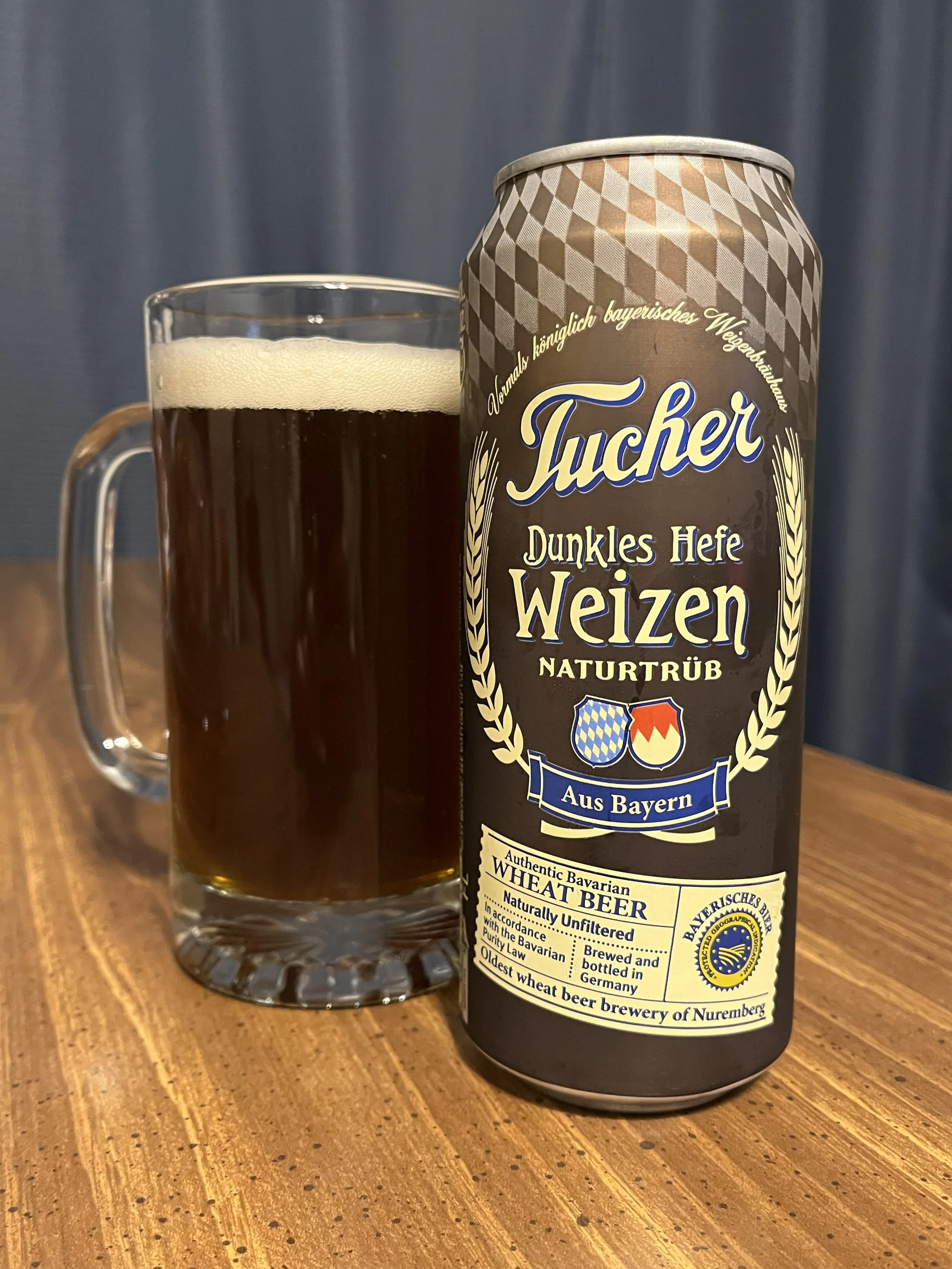
For this 5.2% ABV, we’re leaning on Tucher’s long history (since 1672) as a Bavarian wheat brewer to show us the way forward. With open minds, we go forth. Join us.
First Impressions:
On the Eyes--Copper colored; hazy (per the unfiltered wheat style); topped with an off-white head.
On the Nose--Carries the hefe weizen character with the deep fruity character of banana, a touch of clove spice, and a gentle citrus clarity with an underlying malt sweetness. Intriguing indeed.
On the Palate--As expected with a wheat beer it’s as smooth as whipped cream while remaining light in body, which is a nice vehicle for the rich caramel malt coming from the use of Munich in the dunkel style. But the malt is fleeting as it gives way to the strong fruit and spice character known to the hefe style. The finish is clean with a mild bitterness and lingering citrus freshness, a bite of banana, and the malt sweetness coming back around.
Food Pairings: Tucher’s importer suggests pairing Dunkles Hefe Weizen with roast pork, stewed game, blood pudding, and a bananas foster, which is what this beer tastes a lot like.
Final Thoughts:
Most American beer seekers are familiar with the hefe weizen, and the dunkel has seen some resurgence in the last few years, but it’s not often you see them together. That leads to a certain dilemma for a reviewer: do I review it as a dunkel, or as a hefe weizen? A bit of both, I suppose, is the best answer.
Wheat beers offer smoothness and a light body with the ‘hefe’ adding the iconic yeast character. Dunkels offer deep malt without a heavy body or high ABV. This beer brings these things together.
I tend to veer from wheat beers. I like them quite well, but they don’t make me feel very good. However I love a dunkel, so naturally, I wanted a touch more Munich and deep malt character, but in a beer like this the wheat has its own place, and the balance of malt is necessary to keep the ABV moderate, which Tucher succeeded in.
This beer cost about $8.00 for a four pack of 16.9 oz. cans, and if you’re interested in European beers, it’s a no-brainer to me. It’s rich but light, complex but easy to drink, sweet, fruity, and clean. And I’d like to dedicate this article to that rotating shelf of oddities at the store. Thanks for listening.
Cheers!
Mr. Brew
If you’re looking for a classic Dunkel to nail down the flavor, check out Hofbrau’s Dunkel. It’s one of our favorites and fairly common in America. And if you’re into brewing with Pinter, read our review of their Dunkel, Bavarian Rhapsody.