New Belgium is quite possibly the most popular name in craft brewing, and that has much to do with the fact that they were one of the first to start brewing interesting things on American soil way back in the nineties.
Heavily inspired by Belgian beers in their early days, they’ve since expanded the Belgium side of their brewing into its own collection. Out of that collection comes one of my favorite beers, and possibly the first craft beer I ever drank without realizing it, the 1554 dark ale. Try it if you can find it. I happened to sip another beer from their Belgian line-up—the Honey Orange Tripel—on a layover at Denver airport. Having loved both of these beers, I had to try the Trippel as soon as I could get my hands on it.
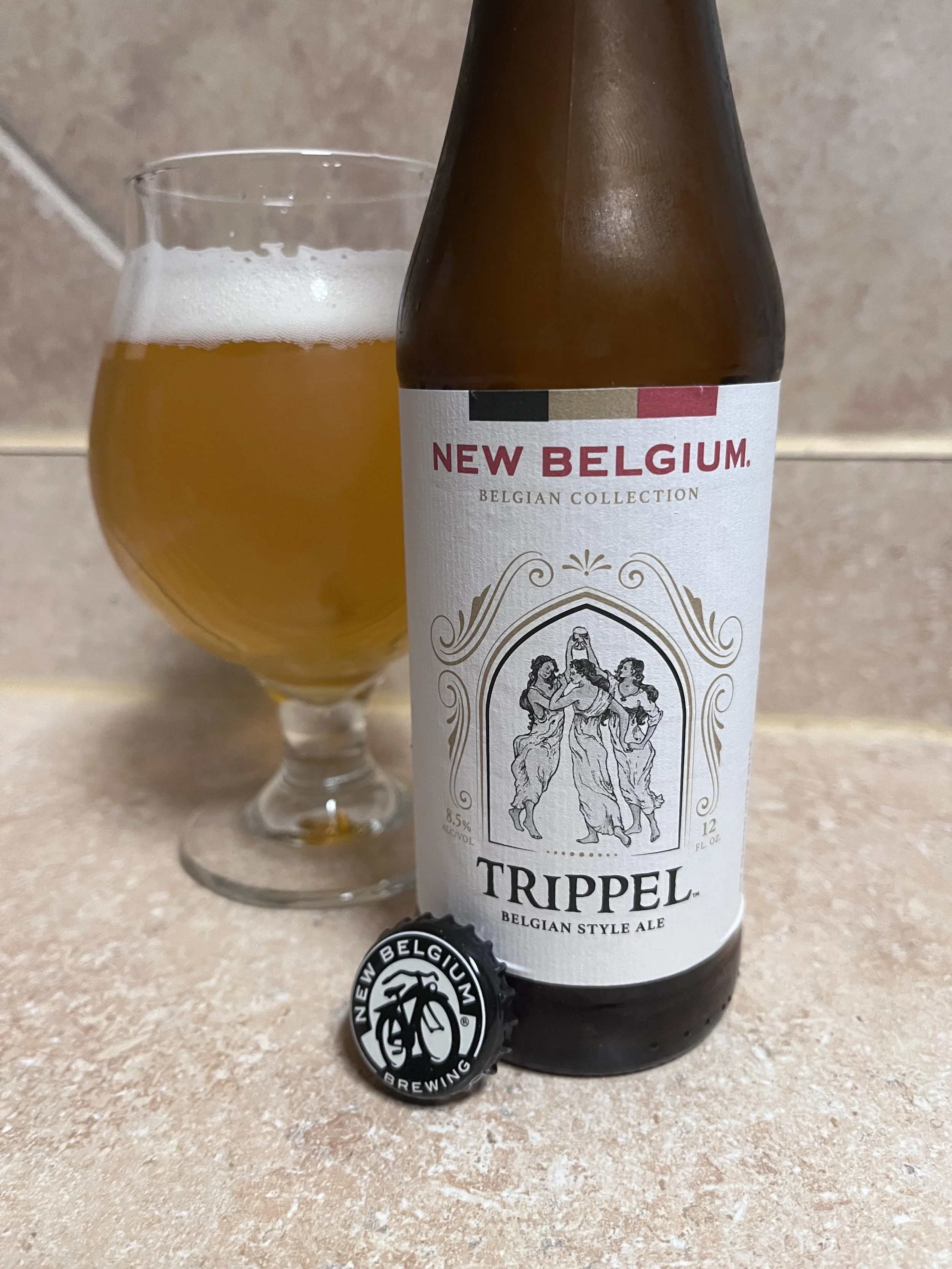
The day has come with the 8.5% ABV and 43 IBU Trippel built on the backs of Pale, Munich, and Pilsner malt, and Nugget, Hallertau Mittelfruh, Saaz, and Liberty hops, all sewn together with the very important Trappist Ale yeast.
Having been brewed since 1992, I’m eager to dive into this beer, and even more eager to learn with the taste buds more about the curious art of Belgian brewing.
First Impressions:
On the Eyes--Golden, clear (as a tripel should be), and topped with a cream-colored head that diminishes quickly.
On the Nose--Spicy and floral from the noble hops. Classic fruity ester aroma rich with banana and clove. Crisp malt character with the clean Pilsner and bready Munich showing up.
On the Palate--The crisp Pilsner malt hits first with the spicy and floral notes following quickly before mellowing into rich and sweet notes of banana and clove that lead into a mouth-coating and dry finish. Floral hops linger with the fruit and spice complementing the noticeable ABV in this light- to medium-bodied Belgian-style ale.
Beer note: What makes a Tripel so powerful, yet light? Heavy malt bills are often complemented with simple sugars (invert sugar, Belgian candi, dextrose, etc.) that are completely consumed by the very active Trappist yeast, compared to maltose sugars from malt. This leaves the body light while ramping up the ABV. And all that work the yeast is doing? Well, that’s how we get those fruity and spicy flavors and the bone-dry finish.
Final Thoughts:
From conception to tasting, Belgian beers are complex, with the Tripel being near the top for intricacy, but this is what makes them fun to look at, sniff, and drink. They are pristinely clear, deceptively strong, and enigmatically flavorful. As you can imagine, they are very difficult to pull off without the right ingredients and environment.
But with over 35 years of experience, New Belgium has both, creating an American tripel worth your time. From a selection of traditional malts and noble hops, down to the use of Trappist Ale yeast, the aroma pulls you in and the flavor sings with a floral and fruity bouquet and an alcohol bite. But, it’s also light and approachable, offering balance to the fruit and floral notes with clean and smooth character from the Pilsner and Munich malts. This is a very good Tripel, and I can say they only get wilder and more complex from here (even in New Belgium’s own line-up), which also makes it a great entry Tripel for those newly-intrigued by the craft.
I know better than anyone how difficult it can be to say no to the Voodoo Ranger line-up or a Fat Tire, but if you’re feeling adventurous, give Trippel a chance.
Cheers!
Mr. Brew
For my fellow Texans seeking another Tripel, try Save the World Brewing’s Tripel. And if you’re feeling funky, try Golden Monkey from Victory Brewing.