
What is a Pinter?
Pinter is a modern homebrew system that uses one keg-like component as its fermentor, conditioner, and tapping keg that produces twelve pints in only fifteen minutes of work. It’s new on the scene after being introduced by a UK company in 2020, and it is causing quite a stir (or lack thereof—my fellow homebrewers know what I’m talking about). We had the opportunity to affiliate with Pinter but thought we better try the product first to see if it’s something we would use and promote ourselves. So, let’s get to the bottom of the barrel. And yes, the jokes will continue.

Pinter and its Components
The whole system consists of the Pinter (the fermentor/keg), a brewing dock (which collects the trub), a sanitizer pack, and the brewing ingredients, which are the beer extract, yeast, and (in some but not all cases) a hopper containing hop oils to be added after fermentation had ended.
That’s it, making it rather easy to get started with limited components and ingredients (and measuring of said ingredients) compared to homebrewing. But what is brewing with one really like?
Brewing with a Pinter
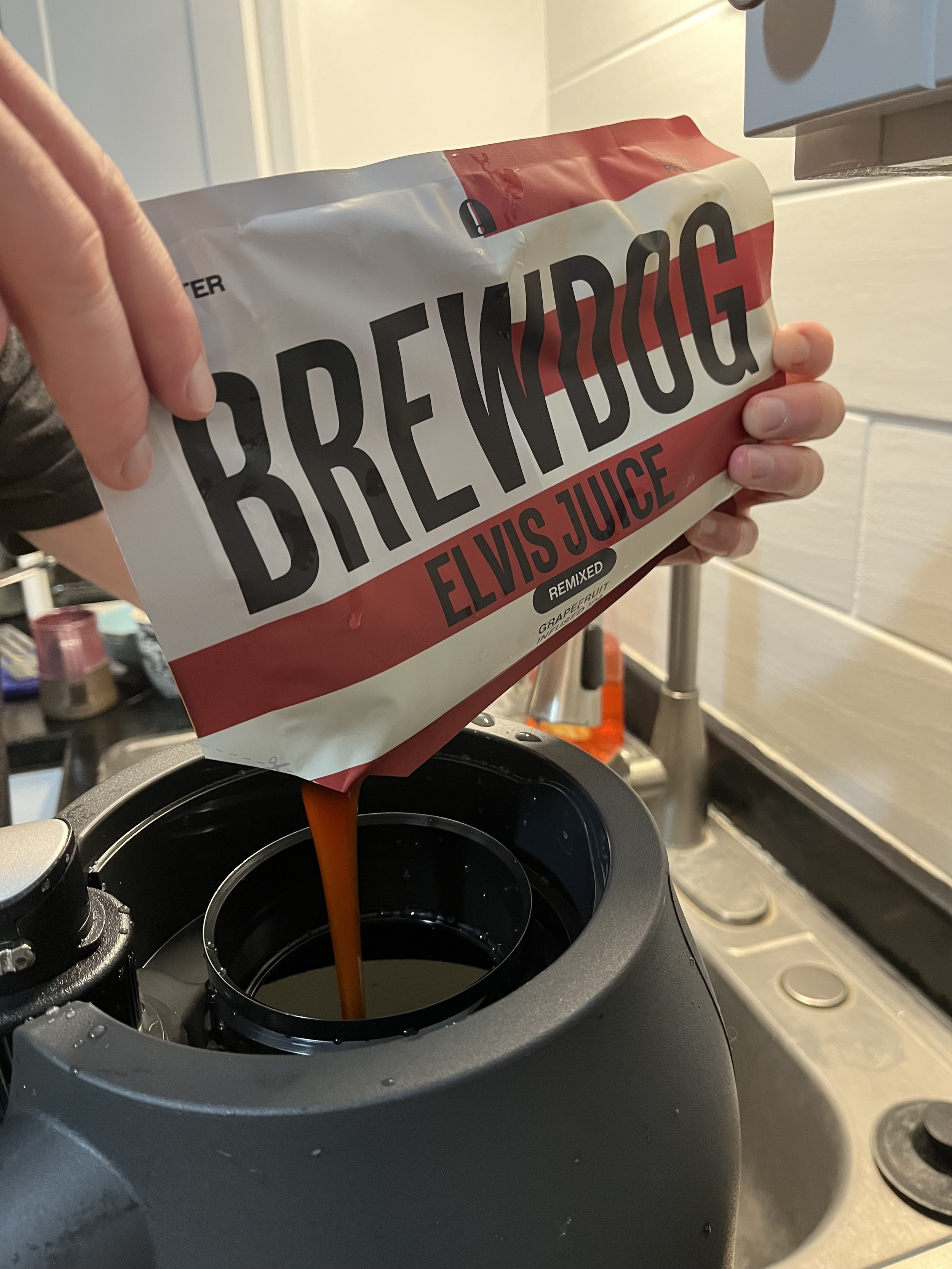
Well, to put it simply, brewing with a Pinter is insanely easy. Children should not drink beer, but they could easily brew with a Pinter. It is simply sanitizing the unit (approximately five minutes), filling the unit with regular old tap water, adding the fresh press beer extract (approximately five minutes, adding the yeast and shaking the unit (approximately two minutes). You then set the Pinter on the brewing dock to collect the trub and turn the carbonation dial to five, which allows for venting but also carbonation to build up. After fermentation, the brewing dock is removed, taking the trub with it. Most of their brewing times are 7-10 days with a conditioning time (in the fridge) of 5-7 days. If a hopper of hop oils comes with the beer pack, it is applied by screwing into the back of the Pinter via its own port to keep oxygen out.
After the time spent in the fridge (conditioning time), the twelve pints are ready for consumption, and according to Pinter will stay fresh for 30 days. All of this information is provided on Pinter’s app (yes, another app for your life), which I will admit we struggled with at first, but it allows you to set up brewing times, see Pinter settings specific to beers, and brew with multiple Pinter units at once.
Final Results
We brewed two different beers (one with the additional hopper and one without) in our Pinter and here are our results:
Both beers were brewed with the recommended brewing times (of which Pinter offers flexibility), and both were IPAs, a style we know well and felt comfortable assessing. They were truly as easy to brew as it appears above, with the addition of the hopper for the one, which, because of the pressure built up, did cause a little mess when screwed into the hopper port—a caution for first timers.
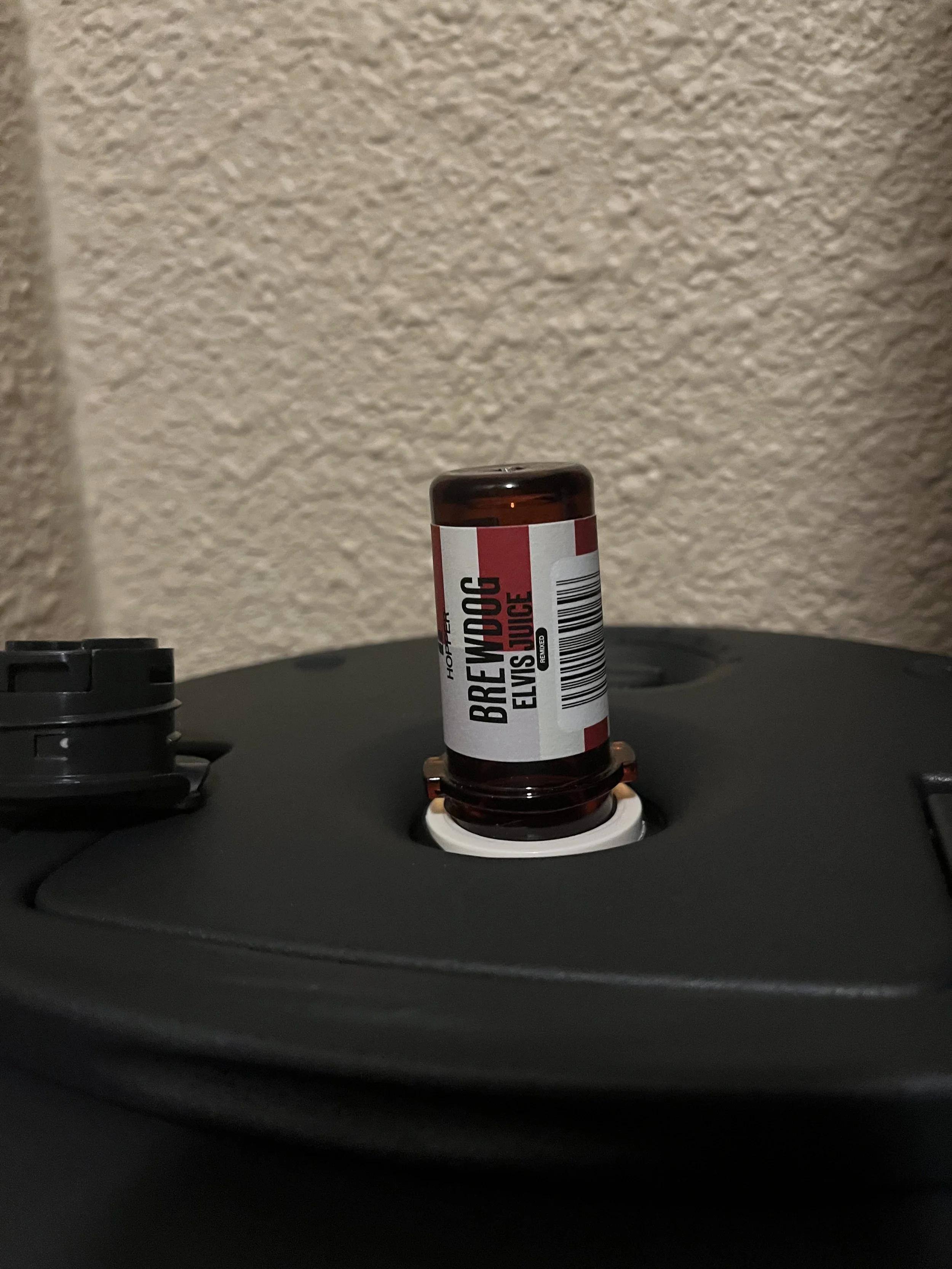
Hop oils for the Brewdog Elvis Juice
One of the biggest issues we found was having enough space in the fridge, because the Pinter is big. We have a double door fridge and with some finagling we got it in, but here is another caution for those interested: Make sure you have the room because it will be in your fridge for a long time.
But the results speak for themselves. The beer was cold, well carbonated, flowed well from the tap, was clear, and really did taste fresh, even professional-brewery quality, and that likely is a result of reducing the steps of the homebrewing process that allow in oxygen or other free radicals to taint the beer. With so few steps the margin of error decreases immensely. The beers were distinct from each other, and being both IPAs were hoppy and pleasant and strong (falling between 6.5-7% ABV) with enough malt flavor to offer some balance.
Overall, I would say we are pleased with the final result of our Pinter experiences, and I will say we will continue to try their beers, but will it replace traditional homebrewing for us entirely?
Is it worth it?
With no question at all, Pinter is easier than homebrewing. The work is all done in about 10-15 minutes and then all there is to do is wait for what is actually great tasting beer. It’s perfect for brewing in the summer, especially for us in South Texas, and for people who want to have that monthly keg (and for people looking to reduce their environmental impact—one of Pinter’s missions) with less effort. Pinter uses no grain, and very little water compared to homebrewing, and the result is probably better than most homebrews I’ve tried, especially when considering how much time is required.
The initial price of the Pinter (with brewing dock) is $149 with the beer packs priced between $28-37. Though I don’t have exact numbers on all the homebrew equipment I’ve bought over all the years or how much I spend on grain and hops, I would say the Pinter might have the slight edge on equipment but might be a little pricier when it comes to beer, but of course that is leaving all the labor out as well. Truly, in the end, it likely costs similar to homebrewing, and would probably be cheaper in the long run depending on the endurance of the equipment purchased.
Will I stop traditional homebrewing because of the Pinter? Hell no! Will I continue to brew with Pinter? Absolutely. Especially when considering all their current, seasonal, and new beer offerings.
Beer Offerings
Stouts, ales, IPAs, lagers, ciders, seltzers, bitters, and seasonals. Yes, Pinter has them all. Pinter has 26 (currently, and rotating always) drink offerings available, and all as simple and easy to make as the last. This is important to us in the Brew House and I imagine it is for you as well. Variety is the spice of life, and even more so in beer. They also offer some of your favorite beers (or some you may not be able to get in your area) from your favorite brewers with collaborations including: BrewDog, Iron Maiden, Sycamore Brewing, and more. And with their popularity increasing, I’m guessing Pinter will only have more to offer in the future.

Final Thoughts
Pinter is cool. And to be more specific, it is easy to use, the beer is high quality, and it takes nearly all the time out of traditional homebrewing. They have many offerings of beer and cider, and it's easy enough to have a couple Pinters to keep the beer flowing all year.
If you like water chemistry, weighing grains and hops, contriving recipes, and spending all day brewing (as I do—no hate), then Pinter actually might not be for you. After the first brew I said: ‘Wait, that’s it?’ But that’s also what makes it cool. It makes brewing down here in Texas during the summer fun, and it ensures there’s freshly brewed beer in the fridge always, and especially on a classic brewday when the hops are being dropped into the boil. One thing I wish I could add more validity to is how durable the equipment is, but no matter what type of brewing you do the equipment is always a risk, especially when under pressure.
If you like the old way, consider a Pinter to keep the fridge stocked during hot summers or while bottle conditioning takes place. And if you’re looking for ease, options, and fresh beer on a short time schedule, definitely get one.
Cheers!
Mr. Brew